
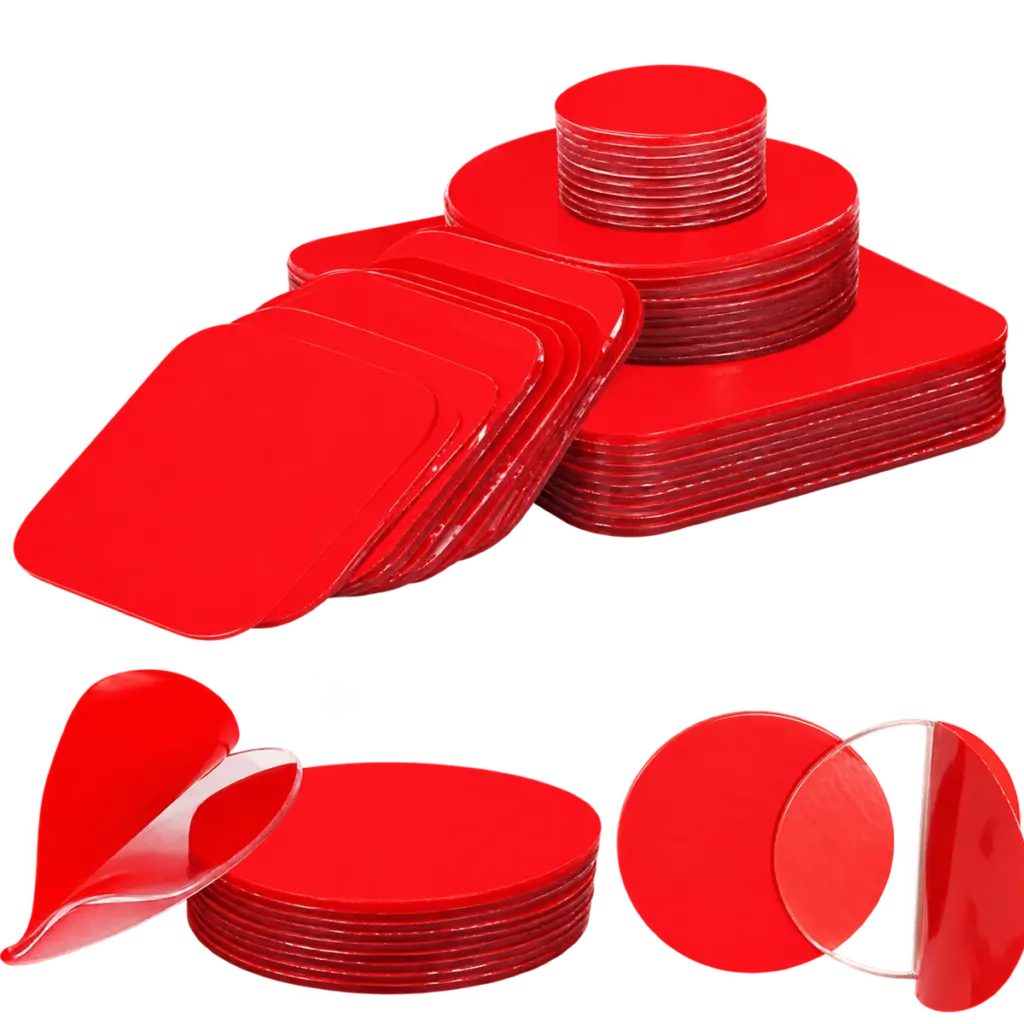
Start with the part you need.
Circular pads, squares and shaped profiles can be reviewed around your application. The outline is only part of the specification: adhesive, substrate, liner and presentation also need to fit the job.
01
Shape & dimensions
Send the outline, dimensions and units. Highlight holes, cut-outs and any critical features.
02
Material & handling
Describe the surfaces, required thickness and how the part will be picked and applied.
What to include in a drawing
| Detail | What to share |
| Outline & units | Drawing or clear outline with length, width, diameter and cut-out dimensions. |
| Critical features | Required tolerances, alignment needs and any areas that affect fit. |
| Material & adhesive | Requested material reference, thickness, surfaces and intended function. |
| Liner & format | Individual pieces, sheets or rolls; tell us about picking and application. |
| Quantity | Trial quantity and expected production order. |
Material options to discuss
Our product range includes foam, PET, PVC and acrylic adhesive products. Bring a material reference if you already have one, or describe the job for a specification discussion.
From drawing to a confirmed order
- 01 / Review the brief. Share the drawing, application and target quantity.
- 02 / Confirm the construction. Discuss material, adhesive, thickness, liner and presentation.
- 03 / Review a sample. Agree the proposed sample and evaluate fit and handling.
- 04 / Confirm production. Agree the final specification, tooling if needed, quantity, packaging and delivery.
Before you request a quotation
Keep dimensions and units consistent. If an existing part needs improvement, explain what should change and include a reference photo. Sample costs, tolerances and tooling are agreed for the specific part.